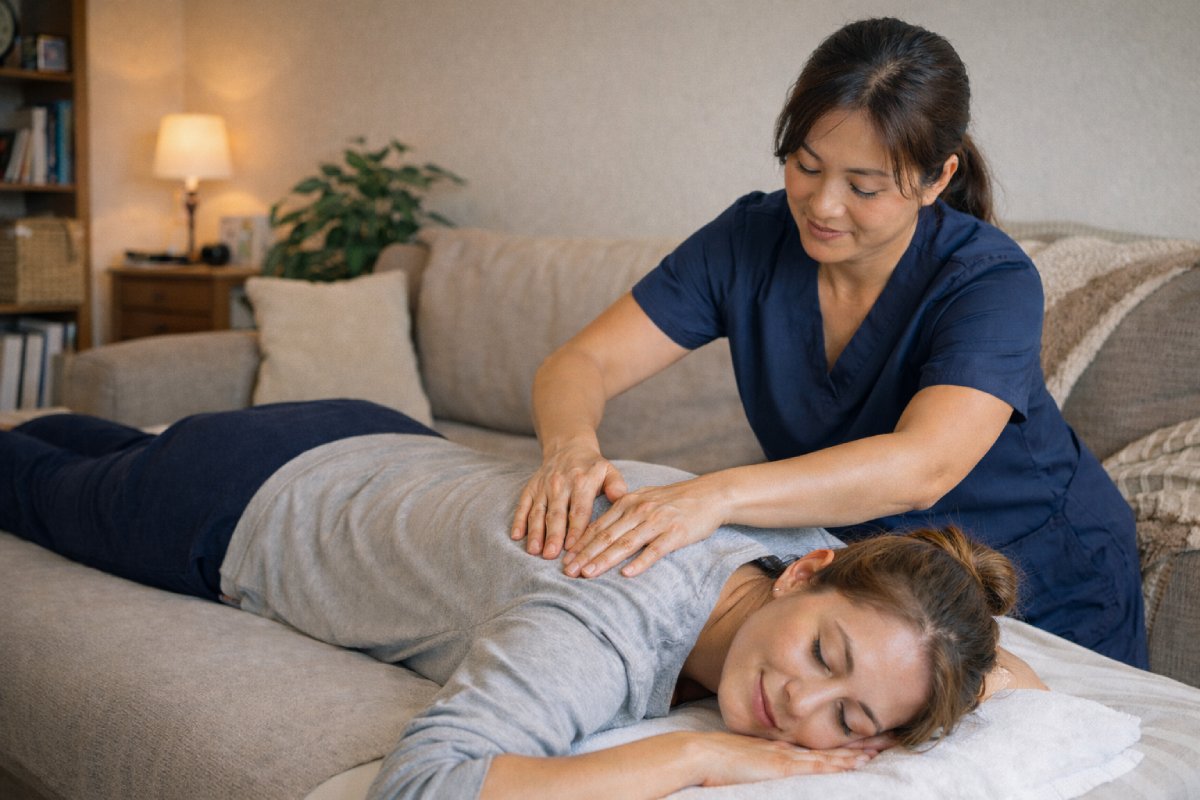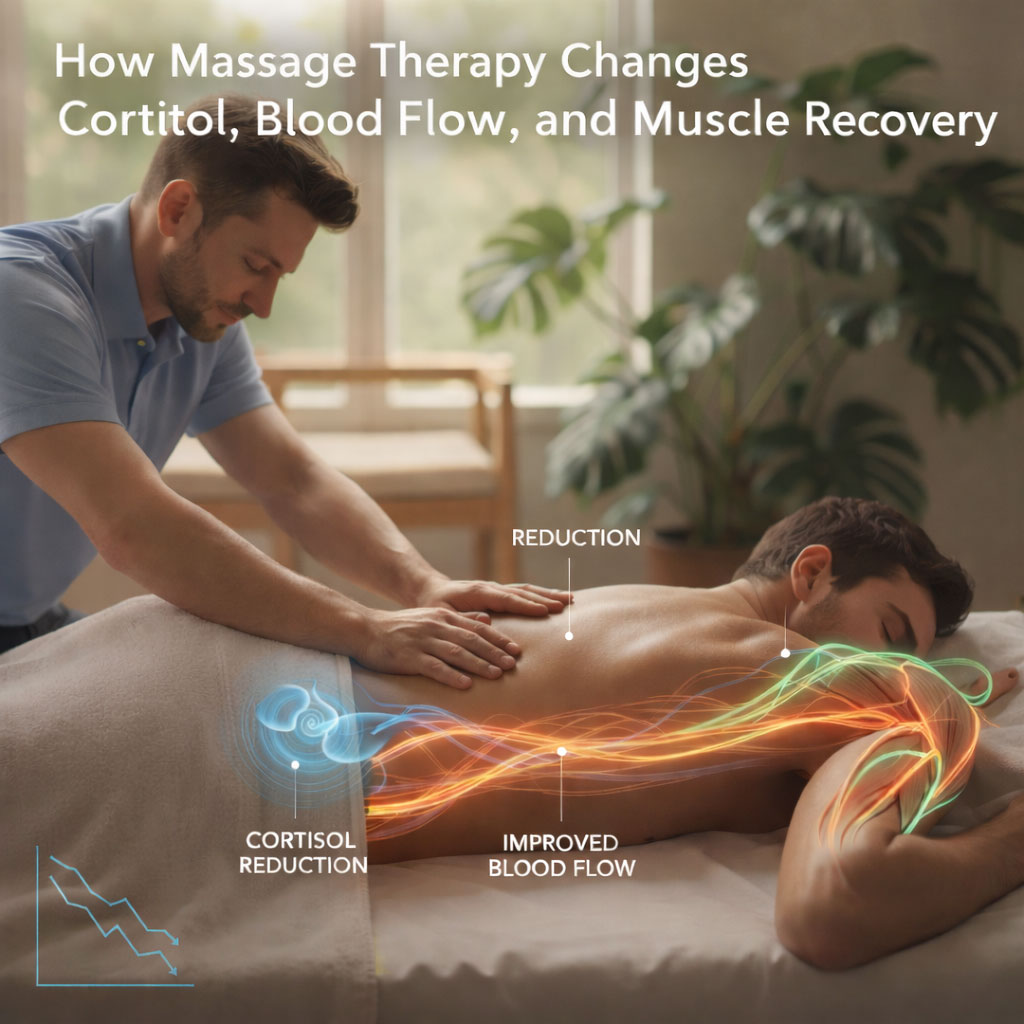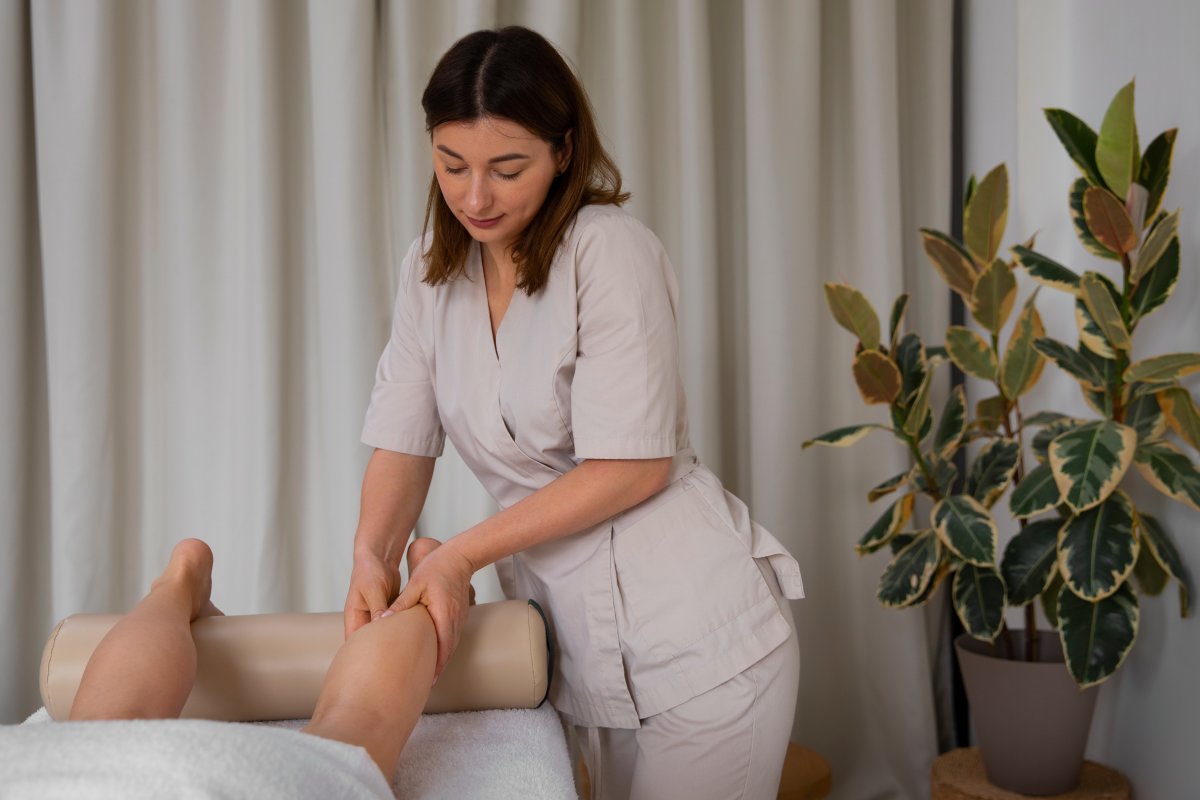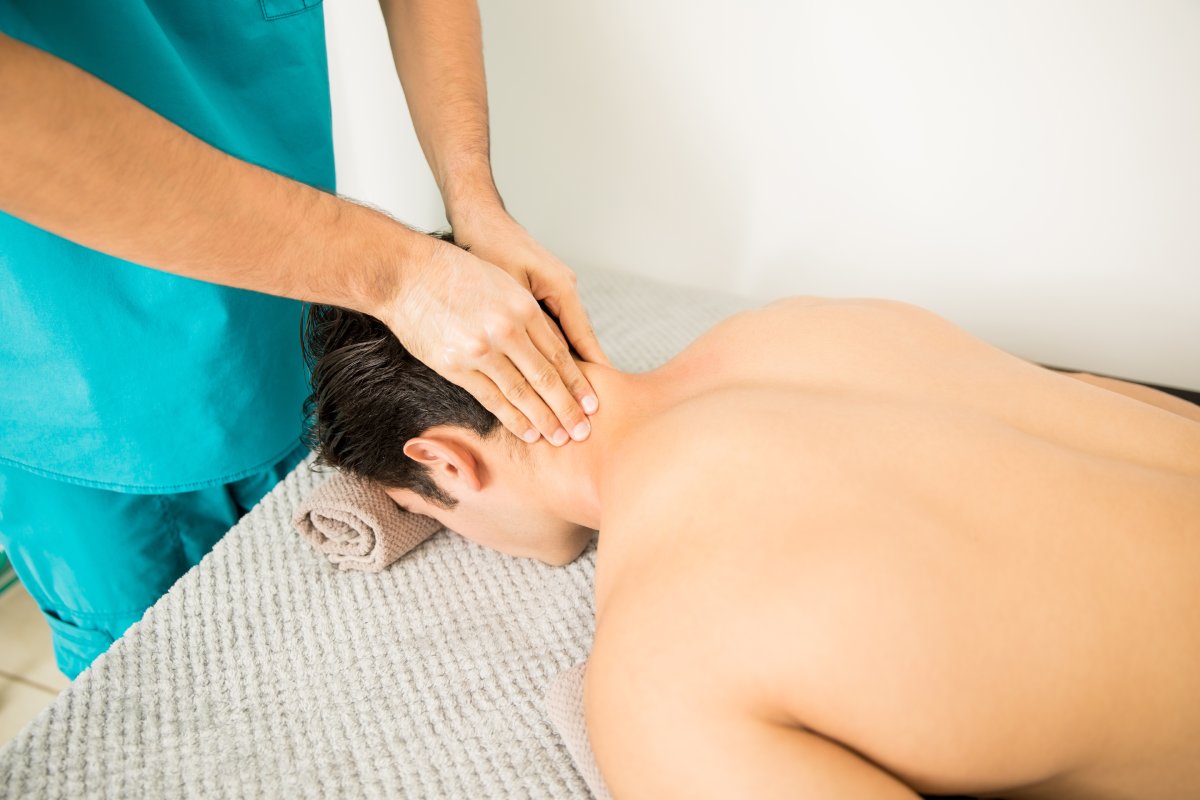
For many people, massage sits in the same mental category as vacations or spa days. It feels nice. It’s relaxing. It’s something you “treat yourself” to.
But here’s what rarely gets said out loud:
Massage isn’t just about comfort. It directly influences how your body manages stress.
Most of us live in a quiet but constant state of activation. Emails. Notifications. Deadlines. Traffic. Family responsibilities. Financial pressure. Even when we think we’re calm, our bodies may still be bracing for the next demand.
Massage doesn’t just distract you from stress.
It helps your body shift out of it.
That shift is why massage functions as a biological reset button.
Table of Contents
- Key Takeaways
- What Actually Happens in Your Body During Massage
- Your Nervous System: The Real Reset Switch
- Stress Hormones and Why They Matter
- Circulation, Muscles, and Physical Recovery
- Sleep, Focus, and Mental Clarity
- Why We Mistake Wellness for “Luxury”
- What Changes When Massage Becomes a Routine
- Summary
- Frequently Asked Questions
Key Takeaways
- Massage supports the shift from fight-or-flight mode to rest-and-recover mode.
- It influences the nervous system through safe, steady touch signals.
- Relaxation responses may support lower stress levels and improved sleep.
- Improved circulation assists muscle recovery and reduces tension.
- Massage is a wellness tool, not just a spa experience.
- Regular sessions may help maintain balance in high-stress lifestyles.
What Actually Happens in Your Body During Massage
When you receive a massage, your body doesn’t just “relax.” It responds in layers.
Steady, intentional touch stimulates pressure receptors under the skin. These receptors send signals to the brain. And those signals communicate something fundamental:
You are safe.
That message sounds simple. Biologically, it’s powerful.
When the brain perceives safety, the body begins to move away from high alert mode. Heart rate may slow. Breathing deepens. Muscles soften. The mind quiets.
This is not placebo.
It’s physiology.
Massage influences the systems that regulate stress, mood, and recovery. The result is a measurable shift toward balance.
That’s the reset happening in real time.
Your Nervous System: The Real Reset Switch
To understand why massage matters, we need to look at the nervous system in simple terms.
Your body runs on two primary modes:
-
Fight-or-Flight Mode
This is your survival setting.
Heart rate increases. Muscles tighten. Stress hormones rise. You prepare to react.
Short-term, this is useful.
Long-term, it’s exhausting.
-
Rest-and-Recover Mode
This is your repair setting.
Digestion improves. Muscles rebuild. Breathing slows. The body restores energy.
The issue in modern life is not stress itself.
It’s being stuck in fight-or-flight for too long.
Massage encourages the body to shift into rest-and-recover mode. That transition supports healing, clarity, and overall regulation.
Think of it like closing dozens of open browser tabs in your nervous system.
Stress Hormones and Why They Matter
When you’re under pressure, your body releases hormones like cortisol and adrenaline.
In short bursts, they’re helpful. They keep your alert.
But when stress becomes constant, elevated stress hormones can affect:
- Sleep quality
- Mood stability
- Energy levels
- Muscle tension
- Focus
Relaxing touch has been shown to support reductions in stress markers while encouraging the release of calming chemicals associated with relaxation and connection.
Massage doesn’t “cure” stress.
It helps your body recalibrate.
In a culture where chronic stress is common, that recalibration matters.
Circulation, Muscles, and Physical Recovery
Muscles tighten for many reasons:
- Sitting for long hours
- Intense workouts
- Driving
- Emotional stress
- Poor posture
When muscles remain tight, circulation in those areas may decrease.
Massage uses pressure and movement to support blood flow. Improved circulation helps deliver oxygen and nutrients to tissues, which assists the body’s natural recovery processes.
That’s why people often say they feel:
- Lighter
- Looser
- More mobile
It’s not just a sensation.
It’s the body responding to improved flow.
Athletes have long understood this principle. But you don’t need to train for a marathon to accumulate tension. Desk work alone can create significant strain.
Sleep, Focus, and Mental Clarity
When the nervous system settles, sleep often improves.
And when sleep improves, everything improves.
Better rest supports:
- Memory
- Mood regulation
- Concentration
- Physical repair
- Emotional resilience
After massage, many people report clearer thinking and less emotional reactivity. They respond rather than overreact.
This is not indulgence.
It’s regulation.
When your body is regulated, your decisions improve. Your patience increases. Your productivity stabilizes.
That has real-world impact far beyond the treatment room.
Why We Mistake Wellness for “Luxury”
Culturally, massage is framed as a reward.
Something you earn.
Something extra.
But preventive care often looks like luxury until you understand the biology behind it.
We accept exercise as necessary.
We accept nutrition as essential.
We accept sleep as foundational.
Massage belongs in that same conversation.
It supports stress management, muscle recovery, and nervous system balance. It encourages restoration in a system that is constantly overstimulated.
The reason it feels indulgent is simple:
What Changes When Massage Becomes a Routine
When massage shifts from occasional treat to consistent practice, the effects tend to compound.
Instead of waiting for burnout, regular sessions support ongoing regulation.
People commonly report:
- Reduced muscle tightness
- Increased body awareness
- A stronger relaxation response
- More consistent sleep patterns
- Greater emotional steadiness
This is not about replacing medical care.
It’s about supporting the body’s built-in systems.
Consistency helps the nervous system recognize what calm feels like.
And once the body remembers calm, it returns to it more easily.
In a fast-paced city like Toronto, staying in fight-or-flight mode can feel normal.
Schedule your massage session in Toronto and experience what true regulation feels like.
Summary
Massage is often misunderstood.
It’s not just dim lighting and relaxation music. It’s not just comfort. And it’s not only for moments when you feel overwhelmed.
At its core, massage supports how your body regulates stress.
It encourages the nervous system to shift into a calmer state. It supports circulation. It helps muscles release tension. It prepares the body for deeper rest.
In a world that constantly pulls you into high alert, that shift is powerful.
Massage isn’t a luxury.
It’s a biological reset button.
Frequently Asked Questions
Is massage really more than just relaxation?
Yes. While massage feels relaxing, it also influences the nervous system, circulation, and muscle tension. It helps the body shift into a rest-and-recover state.
How does massage affect stress?
Massage encourages movement away from fight-or-flight mode. This supports a calmer baseline and improved regulation.
Can massage improve sleep?
Many people experience better sleep after massage because the nervous system becomes more balanced and the body feels less tense.
Is massage only for people with pain?
No. Massage can be part of a general wellness routine even if someone is not experiencing pain. It supports overall balance and stress management.
How often should someone get a massage?
Frequency depends on lifestyle, stress levels, and personal goals. Some people benefit from monthly sessions, while others choose more frequent visits during high-stress periods.
Is massage considered medical treatment?
Massage is widely used as a wellness practice. It supports relaxation and stress regulation but should not replace medical care when needed.
Why Instant Masseuse?
Instant Masseuse isn’t just about booking a massage.
It’s about making nervous system support part of your routine - not just something you turn to when you’re overwhelmed.
In a fast-moving city like Toronto and across the GTA, stress is often constant. Mobile massage removes the barriers that usually get in the way - no commute, no waiting rooms, no extra strain on your schedule.
Just professional care delivered where your body already feels safe: your own space.
If you’re considering whether on-demand massage fits your lifestyle, we’re here to help you make an informed, confident decision - without pressure.
Because real care isn’t about urgency.
It’s about supporting your body in a way that actually lasts.